Discover when web games will match console gaming in performance. Explore current trends, challenges, and technological innovations in browser gaming.
When Will Web Games Run as Well in the Browser as on Consoles?
In the realm of gaming, the debate between browser-based web games and console gaming has long been a topic of discussion. With advancements in technology and internet speeds, the potential for web games to run as seamlessly as console games is more promising than ever. This article explores the current state of web games, the challenges they face, and what the future holds for this ever-evolving platform.
The Current State of Web Games
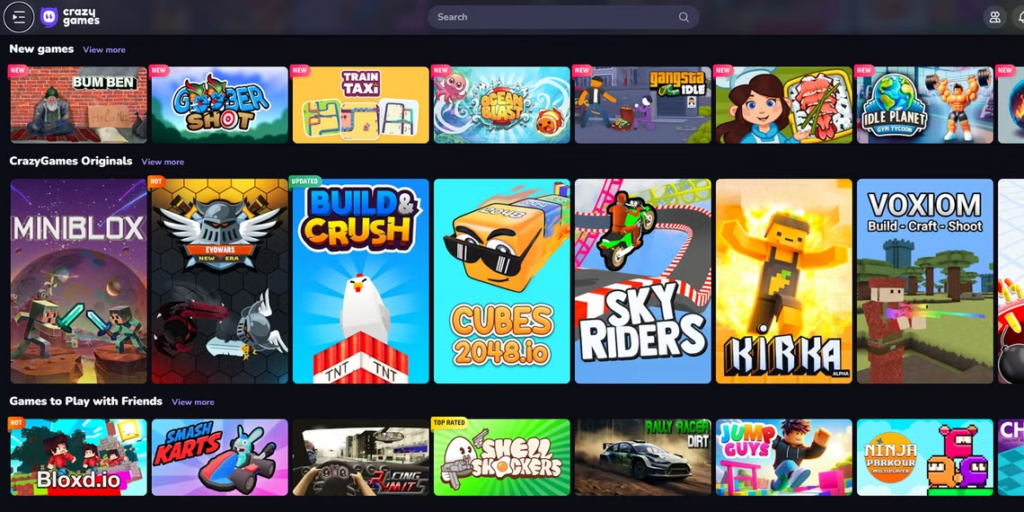
Web games have come a long way from their humble beginnings. Early web games were simple, often comprising of basic graphics and limited mechanics due to technological constraints. However, the introduction of HTML5, WebGL, and faster internet speeds has significantly enhanced their capabilities. Today, web games can offer rich graphics and complex game mechanics comparable to some console games.
Despite these advancements, there are still noticeable differences in performance and quality compared to console games. Many gamers report issues such as lag, lower frame rates, and less immersive experiences when playing web games. These challenges are primarily due to limitations in browser technology and the inherent differences in how web games and console games are developed and executed.
Technological Challenges in Bridging the Gap
One of the primary challenges web games face is optimization. Unlike console games that run on dedicated hardware, web games must operate across a multitude of devices and browsers, each with varying capabilities. This diversity makes it challenging to create a uniformly high-quality experience for all users.
Moreover, current browser technology, while improving, still struggles to match the raw processing power available to console games. Aspects such as real-time rendering and complex physics are areas where browsers need further development to compete with consoles.
Trends and Innovations Pushing the Envelope
Despite these challenges, several trends and technological innovations are making strides in narrowing the gap between web and console gaming:
- WebAssembly: This binary instruction format allows web games to run at near-native speed by enabling more efficient execution of code within the browser.
- Cloud Gaming: Services like Google Stadia and NVIDIA GeForce NOW are paving the way for more sophisticated web gaming experiences by offloading processing to powerful remote servers.
- 5G Internet: The rollout of 5G networks promises faster, more stable internet connections, reducing latency and improving the streaming quality of web games.
The Future of Web Gaming
While web games may not yet fully match the performance of console games, the future looks optimistic. As browser technology continues to evolve, and with the aid of cloud gaming and faster internet, web games are poised to offer experiences that are not only comparable but potentially superior to those on consoles.
Furthermore, web games offer unique advantages such as accessibility and cross-platform play, which are becoming increasingly important in the gaming community. These strengths, coupled with technological advancements, suggest that the future of web gaming holds great promise.
Conclusion
In conclusion, while web games have not yet reached the performance levels of console games, the gap is gradually closing. With continued technological advancements and an ever-growing interest in accessible gaming, it's only a matter of time before web games can stand shoulder to shoulder with their console counterparts.
For now, gamers can look forward to the exciting developments on the horizon, as web games continue to evolve and redefine the boundaries of what's possible in browser-based gaming.