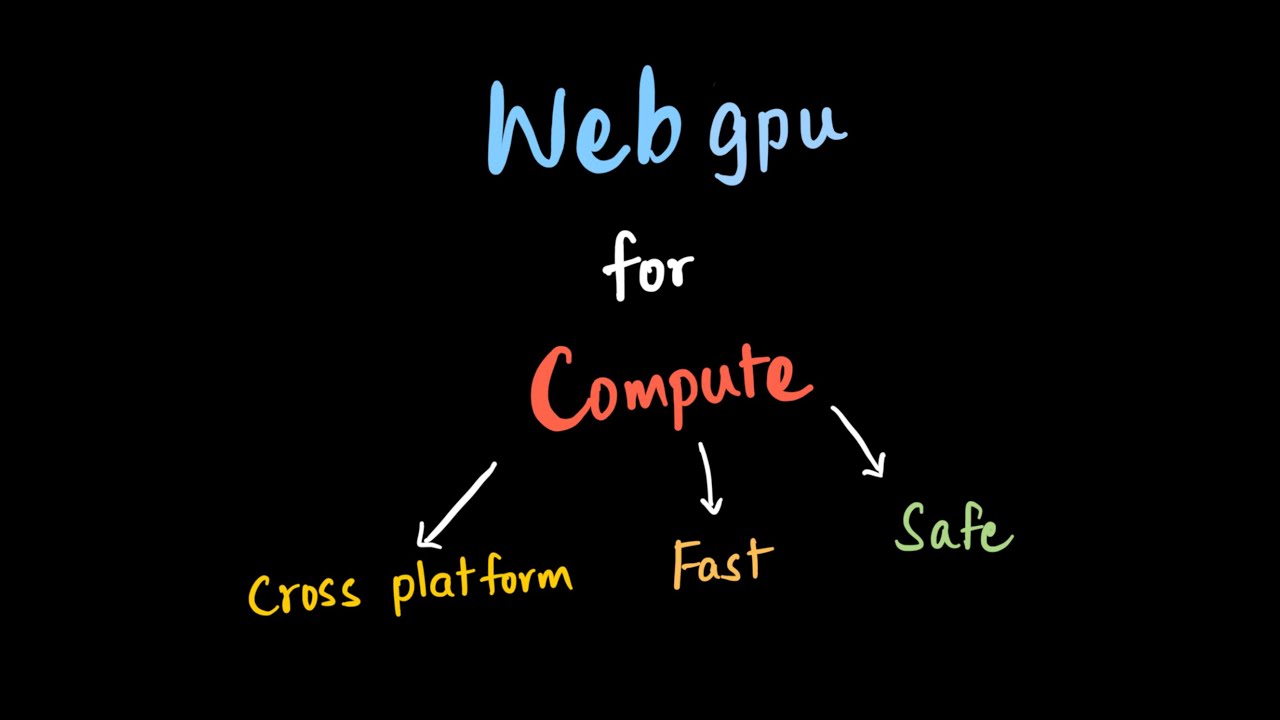
WebGPU Gaming is redefining how developers and players experience performance across platforms. As the first truly cross-platform GPGPU API, WebGPU offers direct access to modern GPU features, enabling faster rendering, real-time ray tracing, and advanced compute tasks. For gamers, this means smoother frame rates, more realistic visuals, and scalable performance whether you’re playing on PC, Mac, or even in-browser. For developers, it’s a future-ready toolkit that makes high-end graphics more accessible without relying on outdated APIs like WebGL.
WebGPU Gaming – The Cross-Platform GPGPU API Powering the Next Era
What Makes WebGPU Different?
WebGPU isn’t just a replacement for WebGL—it’s a leap forward. Unlike its predecessor, which was bound by older abstractions, WebGPU exposes lower-level GPU access in browsers, much like Vulkan, DirectX 12, or Metal do on native platforms. This means developers can tap into modern features such as compute shaders, parallel workloads, and GPU-driven pipelines without hacks or heavy middleware. The result? More efficient rendering, richer visual detail, and games that feel less like “browser ports” and more like full-fledged PC titles.
Why It Matters for Gamers
For players, this translates into technical upgrades you can see and feel:
-
Compute Shaders: Allow for advanced effects like fluid simulations, particle systems, and real-time lighting.
-
Lower Latency Pipelines: More direct access reduces overhead, shaving milliseconds off response times—critical for competitive gaming.
-
Ray Tracing Support: WebGPU opens the door to reflections, shadows, and global illumination techniques that were once locked to native engines.
-
Better Multithreading: Parallelized work distribution means smoother frame pacing and fewer stutters, even in complex web-based games.
WebGPU vs WebGL: The Technical Edge
-
Performance Scaling: WebGPU is built with bind groups and explicit memory management, giving developers fine-grained control over GPU resources. This reduces wasted cycles and boosts frame rates in graphics-heavy games.
-
Modern API Parity: Where WebGL feels closer to OpenGL ES 2.0, WebGPU is aligned with current-gen APIs like Vulkan and DX12, future-proofing web gaming.
-
Cross-Platform Standardization: Whether you’re on Windows, macOS, or Linux, WebGPU is designed to deliver consistent performance without platform-specific quirks.
For Developers: A Broader Canvas
The new API isn’t just about pushing pixels; it’s about enabling gameplay systems that were previously impractical for the web. With GPGPU (general-purpose GPU computing) support, developers can run simulations—AI behaviors, physics interactions, or even real-time world generation—directly on the GPU. This shifts heavy lifting away from the CPU and allows more ambitious game logic to thrive inside a browser tab.
Adoption and the Road Ahead
As of late 2024 and into 2025, WebGPU has experimental support in Chrome, Edge, and Firefox Nightly, with Safari following closely behind. Google’s benchmarks already show significant performance uplifts vs WebGL across a range of demos, from fluid physics to 3D cityscapes. The industry buzz suggests that by 2026, WebGPU will be the default graphics layer for serious browser-based titles, powering everything from lightweight puzzle games to large-scale MMO prototypes that run natively in the cloud.
Conclusion: A Browser Revolution
WebGPU Gaming isn’t just about prettier graphics—it’s about closing the gap between native and web experiences. By enabling compute-heavy workloads, realistic rendering, and scalable performance across devices, WebGPU transforms the browser into a legitimate gaming platform. For players, that means smoother, richer worlds without downloads. For developers, it’s the toolkit that could usher in the next wave of high-end, cross-platform indie and AAA web games.