
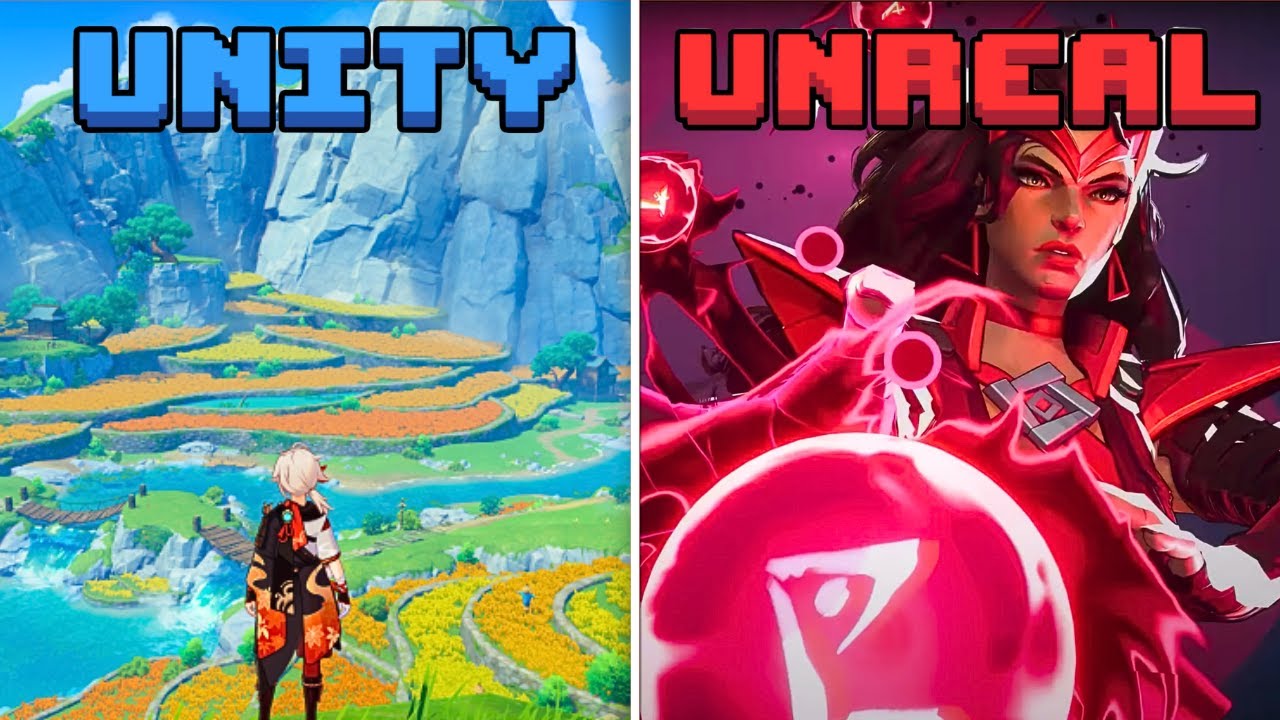
When it comes to choosing a game engine in 2025, the Unity vs Unreal Engine debate is more relevant than ever. Unity’s latest 6.2 update leans heavily into AI-driven development, offering in-editor assistants, procedural asset generation, and streamlined diagnostics that cut down iteration time. On the other side, Unreal Engine 5.4 doubles down on graphical fidelity with cutting-edge tech like Nanite for ultra-dense geometry and Lumen for real-time global illumination, giving developers near-cinematic visuals straight out of the box. Unity’s strength lies in accessibility, cross-platform support, and its thriving indie ecosystem, while Unreal continues to dominate AAA development with unmatched rendering power. Both engines have sharpened their toolsets, making the choice less about raw features and more about what kind of experience you want to build—and for whom.
Unity vs Unreal Engine – The Showdown Every Developer Needs to See
In game development, two engines dominate the landscape: Unity and Unreal Engine. Both power some of the industry’s most recognizable titles, from mobile indie hits to cinematic AAA blockbusters. But with their toolsets evolving rapidly, especially after Unity 6.2’s AI integration and Unreal Engine 5.4’s graphical leaps, the decision isn’t as simple as “indie vs AAA” anymore. Let’s break down what really sets these engines apart in 2025.
Unity: Versatility and Workflow Efficiency
Unity continues to thrive as the go-to engine for cross-platform development. With support for mobile, consoles, VR, AR, and even web builds, it’s built for reach. The Unity 6.2 update has pushed workflow efficiency further, introducing:
-
Unity AI (beta): In-editor assistants that debug scripts, generate placeholder assets, and even run inference models in-game.
-
Mesh LOD Auto-Generation: Automatically generates optimized models at import, shaving hours off optimization work.
-
URP Prepass Layers: Better decal and SSAO handling, giving developers cleaner rendering pipelines on lightweight projects.
This makes Unity especially appealing to indie studios and mid-tier developers who need to move fast while still shipping across multiple devices.
Unreal Engine: Raw Power and Visual Fidelity
Epic’s Unreal Engine 5.4 is still the heavyweight when it comes to visual fidelity. Its Nanite virtualized geometry system lets developers pack in cinema-quality assets without destroying performance, while Lumen delivers real-time global illumination for dynamic lighting setups.
Unreal’s toolkit also shines with:
-
MetaSounds: A procedural audio system offering sample-accurate control for immersive sound design.
-
Blueprint Visual Scripting: Rapid prototyping without diving deep into C++, while still allowing seamless handoff to programmers.
-
Film-Grade Tools: Virtual production workflows, already used in shows like The Mandalorian, give studios transmedia flexibility.
This makes Unreal the obvious choice for AAA studios, cinematic games, or VR projects where realism is non-negotiable.
Learning Curve and Developer Experience
Unity’s reliance on C# makes it approachable for beginners, bolstered by vast documentation and the Unity Asset Store’s prefab solutions. Unreal, while more complex with its C++ backbone, offers deeper control—rewarding experienced developers who want full mastery of rendering pipelines or custom systems.
Cost Models and Monetization
-
Unity: Free for smaller projects, with subscription tiers (Unity Pro/Enterprise) scaling to studio needs.
-
Unreal Engine: Free upfront, but royalties (5% after $1 million gross revenue per title) can impact long-term revenue for successful games.
This often tips indies toward Unity, while Unreal’s cost is easier to justify for big-budget productions.
The Community and Ecosystem
Both engines benefit from thriving ecosystems. Unity’s Asset Store excels at breadth, with countless ready-to-use assets, shaders, and tools. Unreal’s Marketplace skews toward higher-quality, photorealistic content, better aligned with its graphical strengths. Both have vibrant communities of modders, educators, and professionals pushing innovation daily.
Final Verdict
So, Unity vs Unreal Engine—which should you choose?
-
Unity excels at versatility, faster iteration, and cross-platform reach, making it ideal for indies, mobile-first studios, and VR/AR prototyping.
-
Unreal Engine dominates when visual fidelity, cinematic presentation, or bleeding-edge performance are non-negotiable.
Ultimately, both engines have matured into powerhouse ecosystems. The real decision isn’t about which engine is “better,” but which one aligns with your project’s scope, team size, and creative ambition.


