
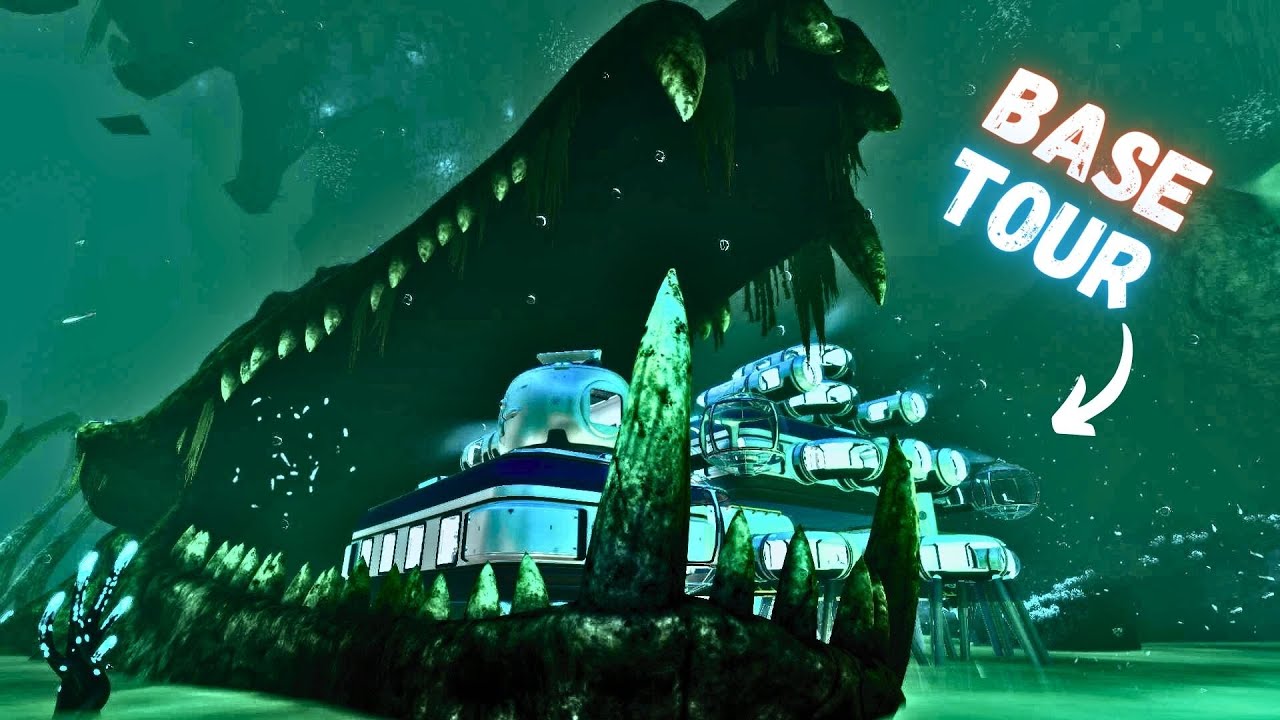
In this Subnautica showcase, the creator unveils an ambitious survival base filled with farming corridors, glass observatories, nuclear and bio reactors, and hidden lookouts. The tour explores sprawling facilities like the Moopools and skull observatory while pushing limits by provoking the Reaper Leviathan. A must-watch for fans of deep-sea survival and creative base-building.
Subnautica Base Tour: Deep-Sea Fortress Fit for a Villain
In the world of Subnautica, survival is more than just catching fish—it’s about mastering engineering, resource efficiency, and strategic placement in a hostile alien ocean. Building a villain-worthy deep-sea fortress isn’t just for show; it requires precise planning, clever power management, and constant vigilance against predators like the infamous Reaper Leviathan. Here’s a tour through one such stronghold and how its design keeps both function and survival in mind.
The Engineering Behind a Massive Base
A large-scale base in Subnautica must do more than look impressive. Every layout decision affects efficiency. Stacking Multi-Purpose Rooms with reinforced foundations ensures structural integrity against depth pressure, while vertical connectors streamline access between living quarters, farming areas, and docking bays. The location of this fortress—bridging the Safe Shallows, Kelp Forest, and Grassy Plateaus—offers immediate access to titanium, quartz, and early-game food sources while avoiding constant harassment from Leviathans.
Specialized Rooms and Strategic Design
At the core of the base is the Moonpool, not only for docking vehicles but also as a hub for Seamoth and Prawn Suit upgrades. The Observatory provides panoramic views and doubles as a lookout for patrolling Reapers. Corridors are reinforced with glass sections for visibility but balanced with metal walls to manage hull integrity. Farms are tucked into vertical growbeds, producing a renewable supply of lantern fruit and marblemelons to sustain long expeditions.
Powering the Fortress: Reactors and Efficiency
Sustaining a fortress at this scale demands careful energy management. Early power comes from Solar Panels and Bioreactors, but once the base expands, Nuclear Reactors become the backbone. Proper placement is key—isolating the reactor in a lower chamber minimizes radiation risk while keeping Reactor Rod storage nearby ensures rapid refueling. Efficient players cycle Bioreactors with easily farmed creepvine samples for redundancy, guaranteeing the base never runs dark even during reactor downtime.
Reaper Leviathan Encounters and Defense Tactics
Building near the Grassy Plateaus almost guarantees unwanted visits from Reaper Leviathans. This base integrates a Scanner Room to track their patrol routes and uses vehicle upgrades for defense. A Seamoth with the Perimeter Defense System allows stunning a Reaper long enough to retreat, while the Stasis Rifle provides a manual fallback option. The key is awareness—Reapers often ambush from below, making high-mounted observation platforms invaluable for early detection.
Balancing Practicality with Style
The base isn’t just functional; it embodies a villain’s lair aesthetic. A frontal glass lookout creates a commanding view of the ocean, while a skull-mounted Observatory adds both flair and practical monitoring of nearby wreck sites. Elevated watchtowers connected by reinforced walkways ensure that even above the surface, the base feels imposing and secure.
Conclusion
This Subnautica fortress demonstrates how creativity, survival mechanics, and technical mastery can come together in a single build. From efficient nuclear power setups to defensive strategies against Leviathans, every design choice matters. For players looking to create their own villain-worthy lair, the key lies in balancing efficiency, safety, and style—turning survival into domination beneath the waves of Planet 4546B.


