
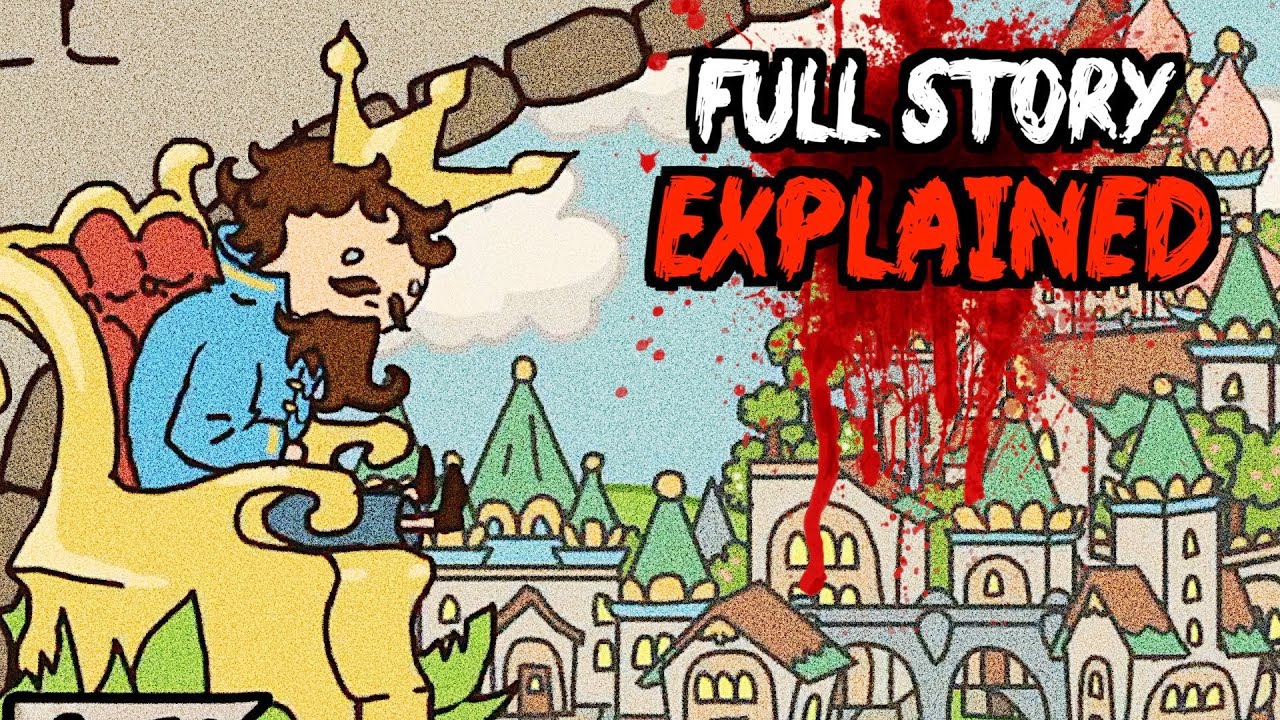
In Sort the Court, every choice shapes the fate of your tiny kingdom. This complete breakdown covers the full story, exploring all possible endings, hidden secrets, and the colorful cast of characters you’ll meet along the way. From balancing your people’s happiness to uncovering obscure side events, this guide reveals how your decisions ripple through the kingdom and unlock every outcome the game has to offer.
Sort the Court – Complete Story Breakdown with All Endings, Secrets, and Characters
What is Sort the Court?
Developed by Graeme Borland, Sort the Court is a deceptively simple indie browser game where you play as a monarch ruling with nothing more than “yes” or “no.” What makes it shine is not just its charming visuals, but how those binary choices ripple across a resource system that tracks population, happiness, and gold — the three pillars that define your kingdom’s survival and growth.
Under the Hood: Why “Yes or No” Isn’t So Simple
On the surface, approving or denying requests sounds casual. But the game’s design layers probability tables, branching logic, and hidden modifiers that make every decision part of a larger system.
-
Population isn’t just a number — it dynamically alters event probability, with more citizens attracting bigger events (both good and bad).
-
Gold acts as both a resource and a narrative key; specific storylines only unlock when you’re wealthy enough.
-
Happiness is a throttle for long-term stability. If neglected, the system triggers harsher events that force the player to re-balance priorities.
This blend of deterministic outcomes and RNG ensures that even with simple inputs, no two playthroughs unfold identically.
Characters and Secrets: More Than Flavor
Each quirky character has unique trigger conditions hidden in the code. The Jester, for example, can either raise happiness or bankrupt your treasury, but his odds change depending on your current population size. The Witch may request funding for experiments, which quietly stack toward rare “secret” events if consistently supported. These hidden dependencies reward players who test different strategies across multiple runs.
Endings: Branching by Balance
The endings aren’t just storybook finales — they’re tied to the game’s resource thresholds and how consistently you’ve managed growth versus decline. Prosperity endings require hitting high simultaneous values across all three metrics, while collapse endings punish imbalance. It’s an elegant use of simple systems to simulate governance, making the finale feel earned rather than random.
Visuals and Audio: Light Touch, Big Impact
Technically, Sort the Court runs as a lightweight Unity WebGL project, but its 2D sprite layering and hand-drawn art mask that simplicity with charm. The soundtrack dynamically shifts to reflect your kingdom’s state, with subtle audio cues reinforcing whether your rule is stable or in decline. This feedback loop keeps you immersed without overt tutorials.
Why It Still Resonates
The game’s brilliance lies in its restraint: by using minimal mechanics, it creates space for emergent storytelling. Players project their own narrative onto the numbers, and the community thrives on discovering secrets hidden in event logic. Even years after release, Sort the Court remains a perfect example of how small indie projects can inspire replayability through smart systems design rather than graphical spectacle.

