
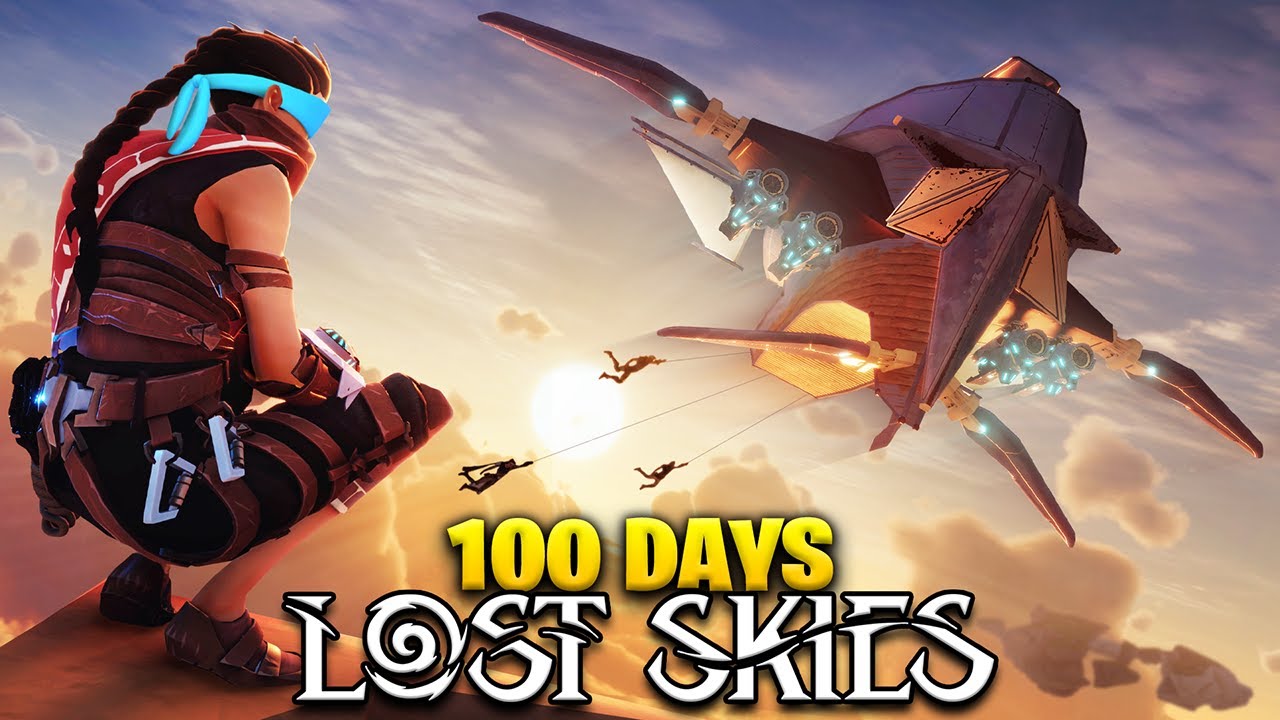
Spend enough time floating between islands, battling storms, and customising your ship, and you start seeing the weight of every small technical choice in Lost Skies. After 100 days in the skies, you feel the pull of the game’s systems: ship layout affecting crew “rested” bonuses, the comfort system finally making furniture and decor matter, and the new map table helping avoid wasted voyages. Recent patches have dramatically improved stability—fixing yawning gaps like disappearing ships, refining combat balancing, and smoothing navigation across the Outskirts islands. Surviving 100 days isn’t just about weathering storms—it’s about leveraging these evolving mechanics to stay ahead of decay, repair costs, and ever-escalating threats.
Lost Skies – What Surviving 100 Days Really Looks Like
Survival games thrive on systems that test endurance, adaptability, and problem-solving—and Lost Skies from Bossa Studios takes that ethos into the skies. Set across a shattered world of floating islands, it mixes exploration, crafting, and survival into a unique airship adventure. But what does it actually mean to survive 100 days in this ever-evolving sandbox? The answer lies in how its mechanics, updates, and systems intertwine.
Survival Beyond the Basics
Unlike many genre peers, Lost Skies isn’t just about managing hunger or finding shelter. Its 100-day journey is defined by how well you balance ship durability, exploration routes, and resource scarcity. Airships are more than transport—they’re living hubs. Ship size, weight distribution, and material quality affect stability in storms and fuel efficiency, making each upgrade a tactical decision rather than just a visual one.
Recent updates have introduced a comfort system that rewards thoughtful interior design. Placing beds, chairs, and crafted furniture not only adds flavor but provides “rested” buffs that affect stamina regeneration and crew morale. Over long stretches, these small boosts compound, changing the rhythm of day-to-day survival.
Exploration and Resource Management
The heart of Lost Skies is its open-ended exploration. Every floating island hosts unique ecosystems—some lush with food and timber, others barren but rich in rare minerals. Surviving 100 days means mastering the loop of scouting, harvesting, and moving on before resources deplete.
The new map table system changes this flow dramatically. Instead of drifting blind, players can now chart efficient travel routes, avoiding dead-ends or storm-heavy regions. Combined with dynamic weather patterns—fog banks that obscure islands, or lightning storms that drain ship shields—navigation becomes a high-level puzzle where foresight saves days of wasted effort.
Combat and Environmental Threats
Surviving isn’t just about resource juggling. Islands and skies alike hide hostile creatures, with some enemies now modified by AI behavior tweaks in recent patches. These foes punish careless exploration, forcing players to weigh whether to engage or evade.
Combat itself leans on stamina and positioning. Airships need to be maneuvered with care, since overloading weapons or engines can compromise control. On foot, melee combat benefits from stamina management, while ranged tools require maintenance and ammo crafted from scarce materials. Over 100 days, neglecting upkeep can snowball into critical shortages.
Community and Multiplayer Dynamics
While Lost Skies can be played solo, the co-op layer transforms survival into a social experiment. Splitting roles—one player piloting, another repairing mid-flight, another charting maps—becomes vital as challenges scale. Community testing phases have shown that crew synergy often matters more than raw resources, making multiplayer coordination a technical skill in its own right.
Why 100 Days Matters
Making it to day 100 isn’t just an arbitrary milestone—it’s a stress test of the systems Bossa has layered in. Ship customization, comfort mechanics, navigation strategies, and resource efficiency all collide to create a survival story unique to each player. Where one group may limp across the skies with patchwork ships and dwindling supplies, another might thrive with fortified vessels and a well-rested crew.
Conclusion
Lost Skies isn’t just another survival adventure—it’s a simulation of resilience under chaotic skies. The recent updates—comfort systems, improved AI, map tools, and stability fixes—make the grind to 100 days feel richer, more technical, and more rewarding. For players looking to test not only their survival instincts but their ability to plan, adapt, and optimize, Lost Skies is fast becoming one of the most ambitious and technically nuanced entries in the genre.

