
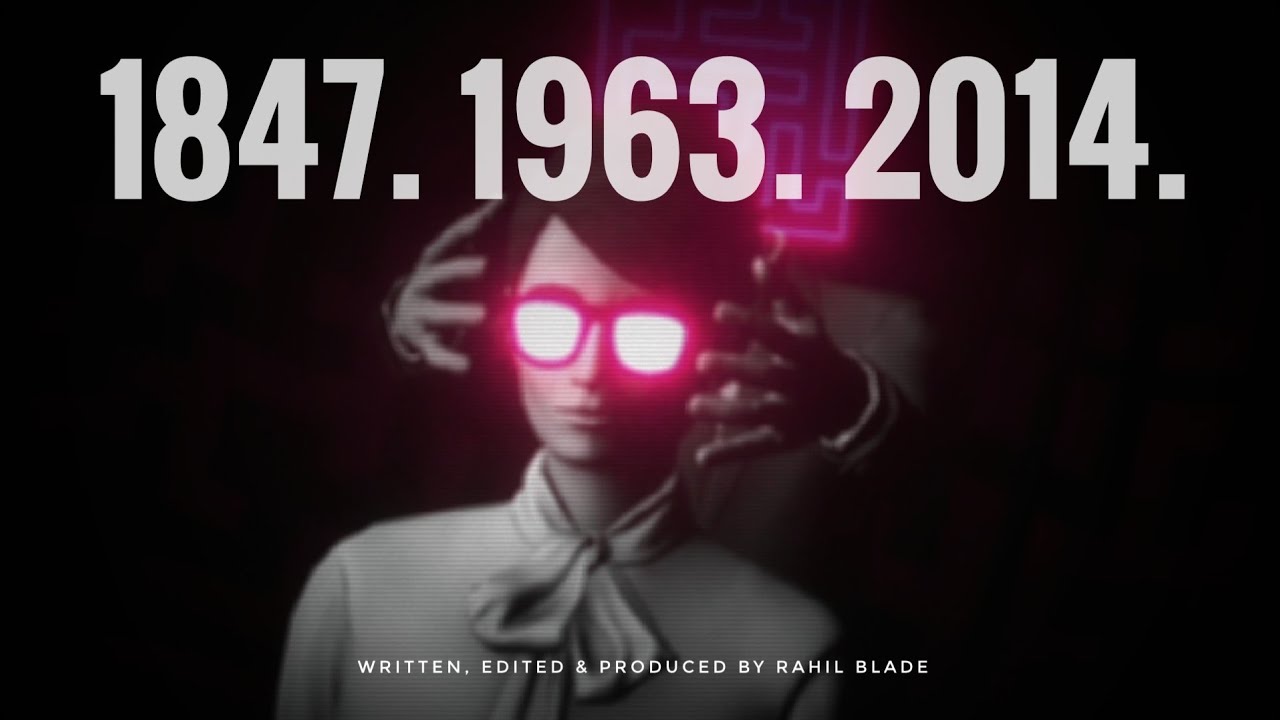
Lorelei and the Laser Eyes is more than just a puzzle game—it’s a labyrinth of logic, memory, and surreal storytelling. Players step into the shoes of a woman lured to a mysterious European hotel, where every corridor hides secrets and every riddle feeds into a greater conspiracy. With over 150 handcrafted puzzles, the game pushes you to rely on observation, deduction, and even note-taking as you piece together its fractured narrative. Recent updates have tightened puzzle logic, refined its “photographic memory” mechanic, and smoothed progression for players who crave a challenge without hitting dead ends. Blending stark black-and-white visuals with striking red accents, and layering in cryptic documents, posters, and nonlinear story beats, Lorelei and the Laser Eyes is a mystery that keeps gamers engaged long after they’ve left the hotel’s shadowy halls.
Lorelei and the Laser Eyes – Untangling the Mystery
In the crowded world of indie puzzle adventures, few games dare to be as unapologetically strange and ambitious as Lorelei and the Laser Eyes. Developed by Simogo and published by Annapurna Interactive, this surreal noir-inspired mystery doesn’t just tell a story—it turns every corner of its design into a puzzle. With its May 2024 release and subsequent quality-of-life refinements, the game has cemented itself as one of the most technically fascinating entries in the genre.
Puzzles as World Design
At its core, Lorelei and the Laser Eyes is about collapsing the line between puzzle and environment. Over 150 handcrafted challenges—ranging from mathematical riddles and logic grids to memory-based cipher decoding—are seamlessly integrated into the hotel setting. Unlike traditional puzzle games where puzzles are isolated, here they emerge from the world itself: a clock that doubles as a code, a movie poster hiding a pattern, or a locked door whose answer lies pages back in your notebook.
The in-game “photographic memory” mechanic acts as both a convenience and a technical showcase. Players can snap clues, maps, and documents into an indexed archive, essentially building their own reference library mid-game. Recent updates refined this system to make clue management faster and less cluttered, smoothing the process for players deep into the mystery.
Narrative Mechanics and Nonlinear Flow
The storytelling is non-linear, but not in a random way. The hotel and its shifting spaces act as a narrative maze, where each unlocked room folds new story fragments into the whole. These fragments don’t just advance the plot—they often redefine puzzles you’ve already solved, forcing you to reconsider past answers in light of new information.
This recursive structure is deliberate. Simogo designed progression as a feedback loop: every puzzle solved unlocks a new narrative fragment, which in turn reshapes how the player interprets the next set of puzzles. It’s a design that thrives on ambiguity but rewards methodical note-taking and patience.
Visual Language as a Puzzle Tool
The stark black-and-white presentation, accented with piercing reds, isn’t just stylistic flair. It functions as a visual guide, drawing attention to hidden details and conditioning the player to look for meaning in contrasts. Objects, shadows, and color accents often double as puzzle cues, demanding that players treat the environment itself as an encrypted language.
This level of visual integration makes Lorelei and the Laser Eyes stand apart from puzzle games that simply drop challenges into a static setting. Here, aesthetic design is mechanical design.
Sound as Subtext
Jonathan Eng’s score underlines the mystery with shifting tonal layers. Ambient tracks morph subtly as players approach puzzle solutions, and carefully placed audio cues highlight objects of importance. Updates since launch have fine-tuned audio balancing, ensuring crucial sound hints aren’t drowned out by ambient noise.
This technical layering turns sound design into a gameplay element rather than just background dressing.
Why It’s Essential
For players who crave more than just a puzzle checklist, Lorelei and the Laser Eyes delivers a complex, interwoven experience where story, mechanics, and design constantly inform one another. Every solved riddle feels less like ticking off a box and more like pushing deeper into a conspiracy woven into the architecture of the game itself.
It’s a game that demands patience and sharp observation, but for those willing to engage with its design on its own terms, the payoff is profound.

