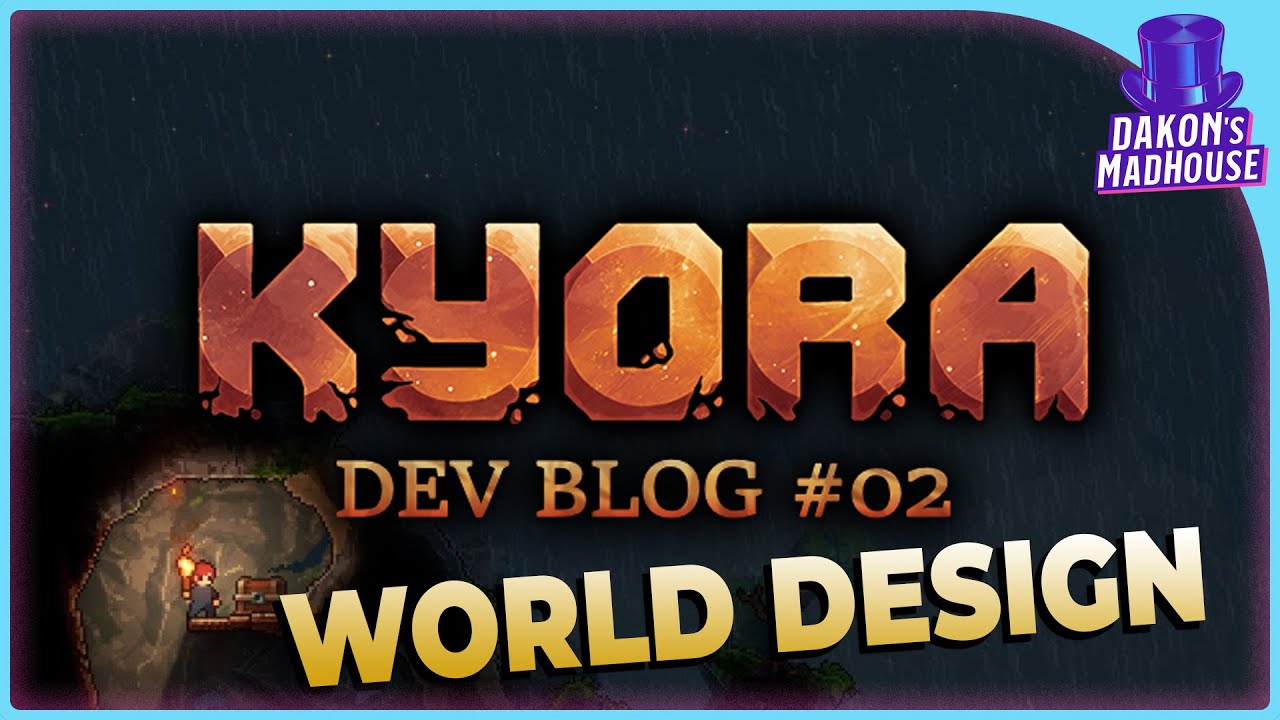
In the latest Kyora Dev Blog Update, the team behind this upcoming sandbox title dives deep into their evolving world generation system. They explain how terrain, caves, resource & creature placement, and points of interest are built using layered noise functions—not just for random variety, but tuned gradients that define usable slopes, ceiling shapes, and overhanging ledges. Because every object in the world is pixel-sized, gravity plays a serious technical role (objects “fall” constantly), which has forced design iteration: adding “fall stops” in critical areas, moderating slope angles, and refining cave roof integrity to avoid collapse or visual glitches. New imagery supports these refinements, briefly showing off how greenery transitions naturally, how biomes shift seamlessly, and how lighting interacts with cavernous spaces to preserve that sense of discovery without overwhelming chaos.
Kyora Dev Blog Update – World Generation News and New Images Revealed
The latest Kyora Dev Blog Update digs into the systems that power this upcoming MMORPG’s most defining feature: its living, breathing world. While plenty of games promise “procedural generation,” Kyora’s developers are opening the hood and showing exactly how terrain, biomes, and environments are stitched together — and the new images are proof of just how far this system has come.
World Generation: How the Grid Shapes Itself
The update outlines how layered noise functions define everything from rolling hills to jagged cliffs. This isn’t random scatter; values are carefully tuned to control slope gradients, cave depth, and even the likelihood of overhangs. Because every tile in Kyora’s world carries simulated physics, the team had to implement “fall stops” to prevent whole structures collapsing under their own weight. This design choice gives the world a sense of fragility — cliffs erode, caves shift — making exploration unpredictable but believable.
Biomes and Environmental Logic
Kyora’s biomes aren’t just visual swaps. They’re generated with rule-based systems that determine vegetation density, weather interactions, and resource spread. For instance, wetlands generate shallow pools that affect both movement speed and combat tactics, while desert regions create heat haze that reduces long-range visibility. The dev blog emphasizes how these procedural layers are designed to influence gameplay as much as aesthetics.
New Images: Proof of Progress
The screenshots released show a world that feels organic: tree roots piercing cavern ceilings, natural light seeping into underground chambers, and biome transitions that fade seamlessly from grassy lowlands into icy plateaus. The lighting system now reacts dynamically to terrain geometry, casting accurate shadows across jagged cliff walls and making caves feel both claustrophobic and alive.
Technical Challenges and Iteration
The developers admit that gravity-driven object behavior has been both their biggest innovation and their hardest obstacle. With every voxel-sized object subject to falling, tuning world stability has meant revisiting generation rules dozens of times. Early versions saw entire biomes collapse like sandcastles; now, controlled reinforcement points allow the chaos to feel natural without breaking playability.
Why It Matters for Gameplay
For players, this means that no two expeditions will feel the same. Caves may open into unexpected vertical drops, cliffs may shear off mid-battle, and resource hunts may force detours as physics reshapes the terrain. It’s not just procedural variety — it’s procedural dynamism, ensuring exploration stays dangerous and fresh.