
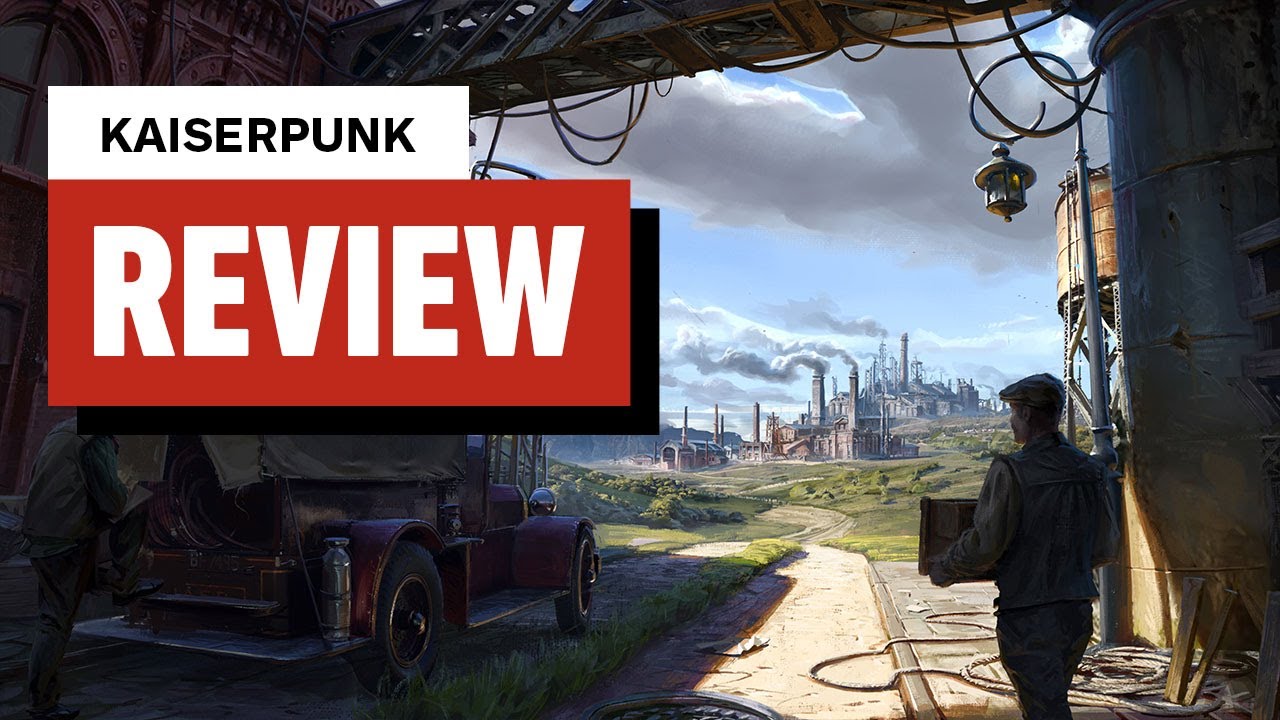
Explore Kaiserpunk, a compelling gaming subgenre blending imperial aesthetics with speculative fiction. Discover its origins, key elements, and future.
Kaiserpunk Has Great Ideas, But Falls Apart in Execution
The strategy and city-building genre has always pushed the limits of complexity, but Kaiserpunk aims to go one step further. With its lavish imperial-inspired aesthetic and layered mechanics, it sets out to merge detailed city-building with large-scale strategic warfare. On paper, this blend is ambitious and innovative. In practice, however, the execution leaves much to be desired.
A Genre-Bending Identity
Kaiserpunk positions itself as more than just a city-builder—it’s a fusion of empire management, alternate-history warfare, and speculative technology. It draws from the grandeur of imperial Europe but overlays this with speculative mechanics like industrial war machines and exaggerated production chains. The idea is to create a game that feels both historical and imaginative, much like how steampunk redefined Victorian fantasy.
The Strengths: Production Chains and Visuals
One of the game’s strongest features is its approach to production chains. Unlike simpler city-builders, Kaiserpunk requires players to think about efficiency on multiple layers. For instance, a munitions factory isn’t just fed by raw materials—it requires intermediate goods from smaller workshops, forcing players to plan ahead. At its best, this system can feel like solving a living puzzle, where every decision echoes throughout your empire.
The aesthetic presentation also deserves credit. The richly detailed architecture, uniforms, and interface elements capture the imperial vibe brilliantly. It feels like managing a turn-of-the-century empire on the brink of modernity—ornate, heavy, and mechanical.
The Weaknesses: Technical Shortcomings
Where Kaiserpunk struggles is in execution. There are save-killing bugs that can abruptly end hours of progress, an unforgivable issue for a game built on long-term investment. Beyond that, the interface lacks some expected quality-of-life functions, like proper filtering, unit grouping, or clearer production metrics. For a title hinging on complex economic chains, this omission creates unnecessary friction.
Another issue is the disconnect between city-building and the overworld strategic map. The city systems feel rewarding in isolation, but when merged with the over-ambitious global strategy layer, they clash. The pacing becomes uneven, and managing both layers simultaneously feels less like a clever design choice and more like over-scoping.
The Bigger Picture: Potential with Patches
Despite its flaws, Kaiserpunk isn’t without promise. If the developers can address its technical bugs, streamline the interface, and harmonize the city and strategy layers, the game could become a standout. There’s a clear niche for players who enjoy deep management sims with alternate-history flavor, and Kaiserpunk has all the ingredients—it just needs to cook longer.
Conclusion
Right now, Kaiserpunk feels like a prototype for a brilliant idea rather than a polished experience. The bones of a truly great city-builder with a unique identity are here, but the execution leaves players feeling frustrated instead of empowered. If patches roll out to stabilize and refine the mechanics, Kaiserpunk could grow into the genre-defining title it aspires to be. For now, though, it remains an ambitious misfire that’s more interesting in theory than in practice.


