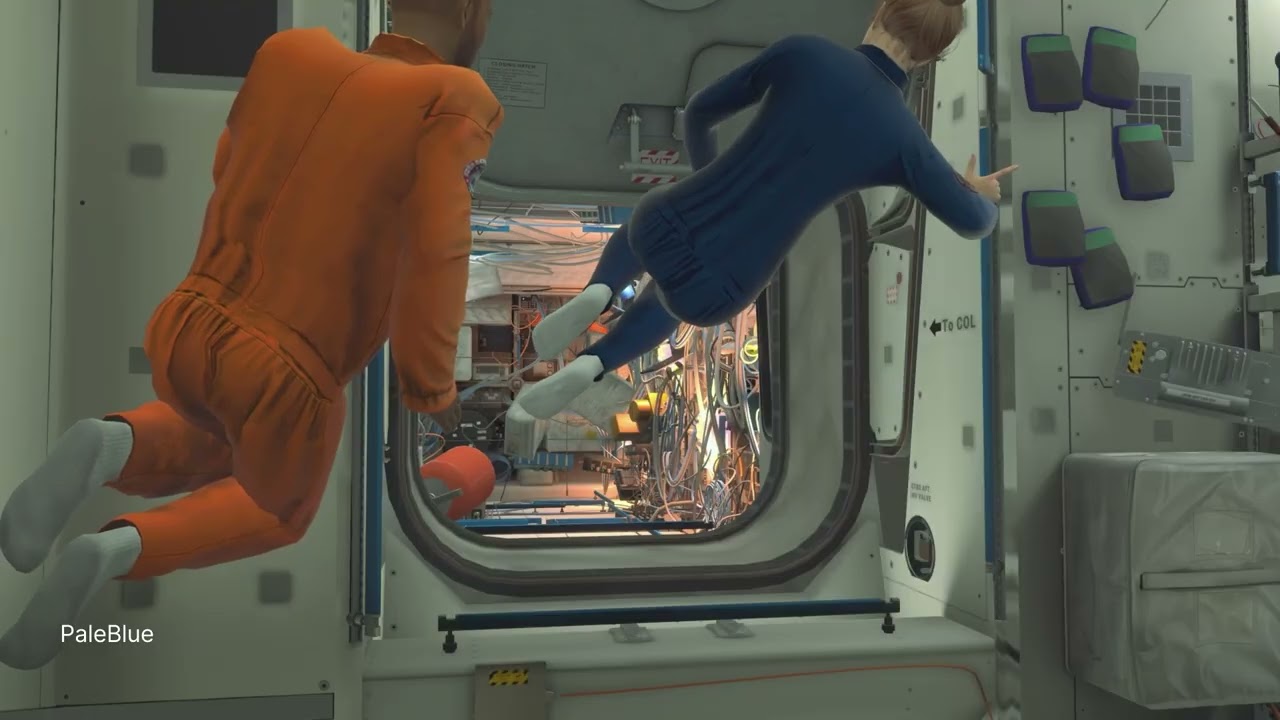

The Jump Space launch brings fast-paced platforming into orbit, blending gravity-defying jumps with chaotic, cosmic-level challenges. Available now on Web, this release sharpens its arcade mechanics with tighter controls, smoother animations, and new stage designs that test timing and precision. Whether you’re dodging hazards or chasing high scores, Jump Space keeps the action relentless and addictive, making every leap feel like a fight against the void.
Jump Space Has Launched! Fast-Paced Gameplay Meets Cosmic Chaos
A Bold New Take on Space Exploration
With the Jump Space launch, Galactic Games has introduced a title that mixes interstellar exploration with arcade intensity. Unlike traditional space sims that lean heavily on realism, Jump Space thrives on momentum-driven gameplay. Players aren’t just floating in empty space—they’re navigating gravity wells, momentum shifts, and energy-based traversal mechanics that demand quick reflexes and forward planning.
Each system you enter is procedurally generated, but not in the generic sense. The developers use layered procedural generation, meaning nebulae, asteroid belts, and alien ruins aren’t just random scatter—they’re algorithmically tied to player progression. This ensures variety without sacrificing world logic.
Spacecraft Systems and Customization
Customization in Jump Space isn’t cosmetic fluff; it directly affects survivability. Ship modules range from standard thrusters to experimental warp cores, and each upgrade impacts performance metrics like acceleration curves, energy efficiency, and cooldown windows for special maneuvers.
Recent updates added energy redistribution mechanics, letting players reroute power between shields, engines, and weapons mid-battle. This creates high-stakes decision-making—divert energy to shields to tank incoming fire, or gamble on speed boosts to dodge instead.
Combat and AI Behavior
Combat encounters play out in tight arenas where positioning and timing are everything. Enemies aren’t scripted fodder—they run on adaptive AI routines that study player tendencies. Aggressive play might trigger enemy flanking, while defensive strategies lure in coordinated swarms.
Boss battles are especially technical, demanding mastery of pattern recognition, module synergy, and precision dodging. One early fight against the “Wraith Serpent” highlights how layered mechanics work together: players must balance weapon overheating, momentum from gravitational pulls, and timed shield bursts to survive.
Visuals and Audio: Designed for Immersion
Jump Space leverages real-time lighting and particle systems to bring its chaotic universe to life. Explosions leave plasma trails, while stars refract light differently depending on planetary atmospheres. The visual fidelity isn’t just eye candy—it affects gameplay visibility, forcing players to account for glare or environmental hazards.
The soundtrack deserves its own credit: procedural layering means combat tracks dynamically shift based on intensity, while ambient synth scores adapt to each sector’s biome. Combined with positional audio cues for enemy movement, it creates a heightened sense of tension.
Multiplayer: Seamless and Strategic
Jump Space offers seamless transitions between solo and multiplayer play. Drop-in co-op allows allies to join exploration runs mid-session, while PvP introduces structured arenas with ship class balancing to prevent meta dominance. Players can coordinate power redistribution in team battles, turning squad composition into a technical layer of strategy.
Community and Roadmap Ahead
Galactic Games has already detailed its roadmap: upcoming seasonal events will introduce limited-time anomalies, faction-based multiplayer wars, and new ship modules tied to narrative arcs. Modding support has also been teased, with tools for custom planetary biomes and ship hull designs.
Community feedback loops are already active—recent hotfixes tuned weapon overheating thresholds and improved collision detection after early access testers highlighted exploits. This responsiveness suggests a long lifecycle where mechanics will keep evolving.
Conclusion: Chaos with Depth
The Jump Space launch isn’t just another space game release—it’s a showcase of how technical depth can make cosmic chaos exhilarating. With adaptive AI, layered procedural systems, and a finely tuned ship customization framework, the game balances fast-paced action with strategic decision-making. For gamers looking for a space title that rewards both reflexes and brainpower, Jump Space is the launch worth strapping in for.