
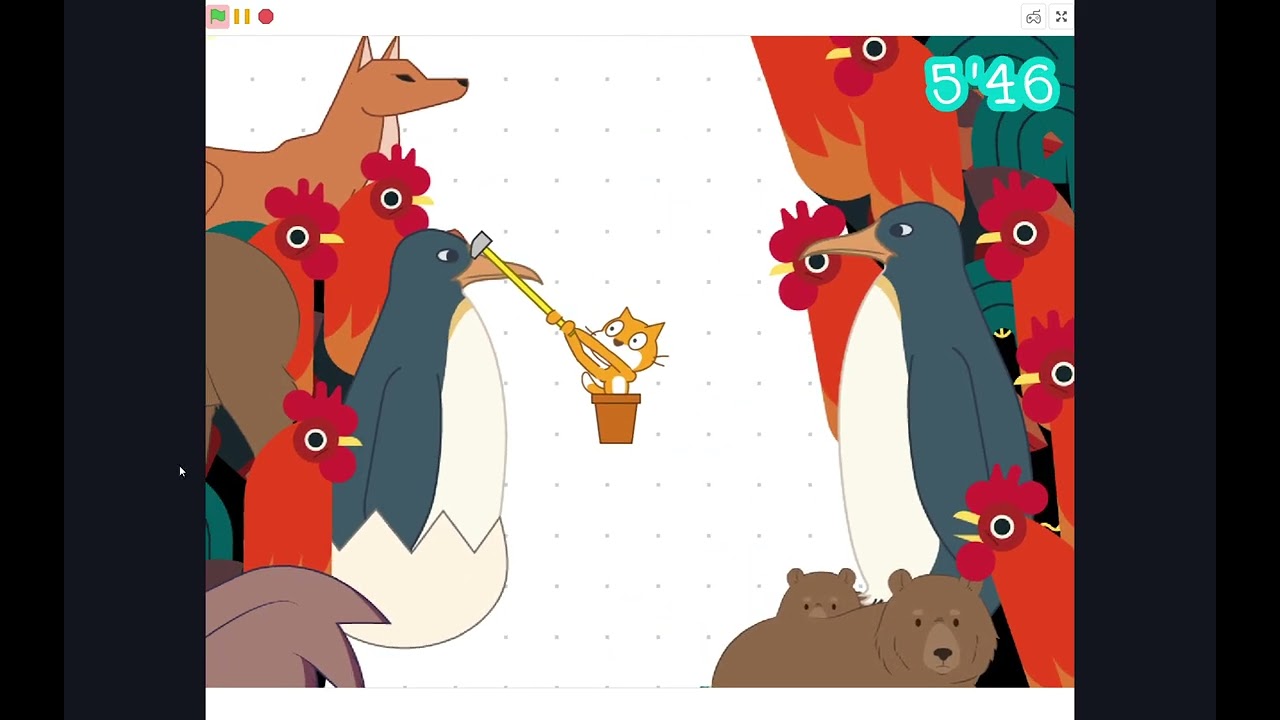
Explore the challenging world of 'Getting Over It,' a game that tests your patience and skill in a unique climbing experience.
Getting Over It: Conquer the Climb
In the realm of gaming, few titles test the mettle of players quite like Getting Over It with Bennett Foddy. Released in 2017, this arcade-style climbing game has become a cult classic, known for its punishing difficulty and philosophical undertones. As players navigate a surreal landscape using only a hammer, they're invited into a world where patience and skill are constantly tested.
The Essence of the Climb
At its core, Getting Over It is deceptively simple. Players control a character named Diogenes, who resides in a cauldron and must climb a mountain using nothing but a Yosemite hammer. The controls are straightforward yet intentionally difficult to master, requiring precision and timing to scale the game's seemingly impossible obstacles.
What makes this game particularly captivating is its minimalist design and the absence of checkpoints. Every slip, every fall, is a chance to start over, driving home the game's themes of persistence and resilience. As you progress, the terrain becomes more challenging, and the consequences of a single misstep grow more severe, testing both your skills and mental fortitude.
The Philosophy Behind the Frustration
While Getting Over It is renowned for its difficulty, it is also celebrated for its philosophical narrative. Bennett Foddy, the game's developer, accompanies players with a series of musings about failure, perseverance, and the nature of gaming itself. These reflections provide a unique backdrop to the physical challenges, transforming each frustrating fall into an opportunity for introspection.
Foddy's commentary creates a meta-narrative that blurs the line between player and game, inviting gamers to reflect on their own experiences of success and failure. This philosophical layer adds depth to the gameplay, making each attempt not just a test of skill, but a journey of personal growth.
Strategies for Success
For those brave enough to tackle Getting Over It, a few strategies can help mitigate the frustration and enhance your chances of success:
- Patience is Key: Approach each segment with a calm mind. Rushing often leads to mistakes.
- Master the Controls: Spend time understanding the nuances of the hammer mechanics. Practice makes perfect.
- Learn from Mistakes: Every fall is a learning opportunity. Analyze what went wrong and adjust your strategy.
- Take Breaks: If frustration mounts, step away for a bit. A fresh perspective can make a huge difference.
The Community and Cultural Impact
Since its release, Getting Over It has spawned a dedicated community of players and content creators. Streamers and YouTubers have embraced the game's challenging nature, often showcasing their own attempts at the climb, complete with falls, rages, and triumphs. This has contributed to the game's enduring popularity, as viewers relish the shared experience of struggle and success.
The game's cultural impact is also noteworthy. It has inspired a genre of 'rage games' that emphasize difficult mechanics and minimal forgiveness, challenging gamers to push their limits both mentally and physically.
Conclusion
Getting Over It with Bennett Foddy is much more than just a casual arcade game. It is an exploration of human perseverance, a philosophical journey wrapped in a deceptively simple package. For those willing to embrace its challenges, it offers not only a test of skill but also a profound reflection on the nature of failure and success. Whether you're a seasoned gamer or new to the world of arcade challenges, Getting Over It promises an experience that is as rewarding as it is demanding.

