
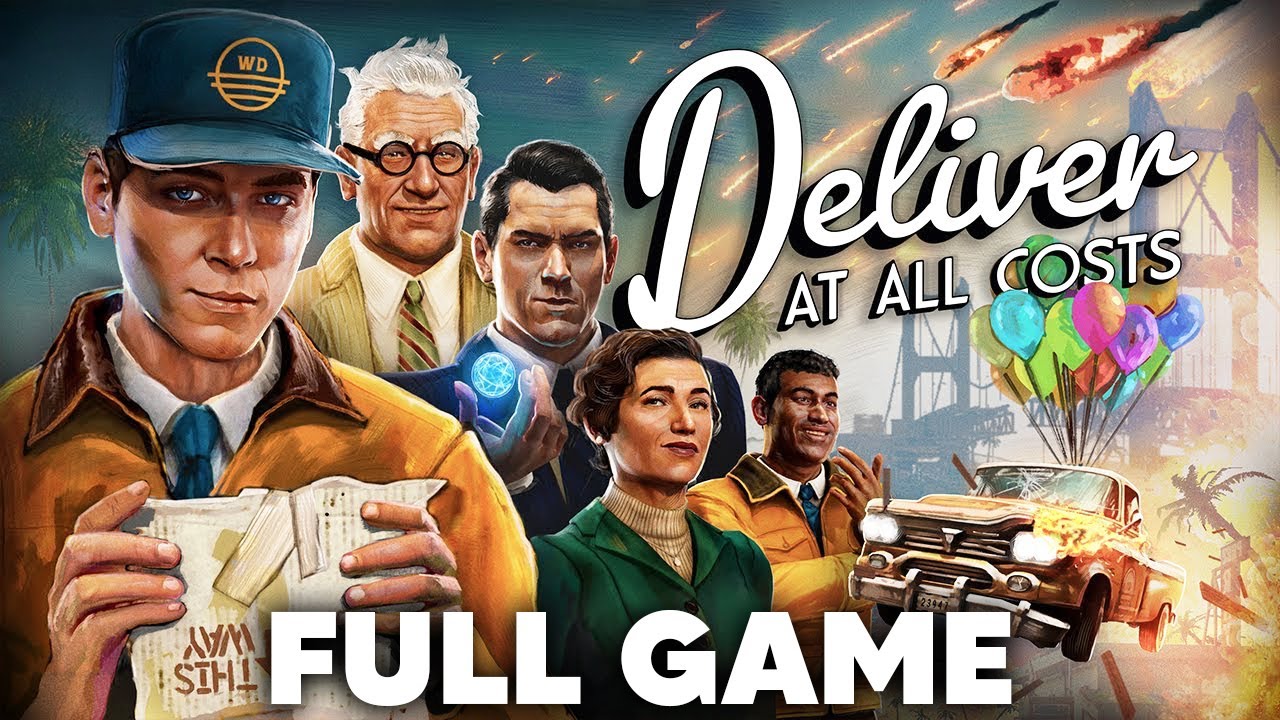
Deliver at All Costs Full Game Review digs into one of 2025’s more peculiar action-adventure entries—Far Out Games’ debut that asks: how much chaos can you carry in the back of a delivery truck? Set in a stylised 1959 across semi-open cities like St. Monique, Shellington Falls, and New Reed, the game blends vehicular traversal, physics-based destruction, and narrative threads. Steam Store
Deliver at All Costs Full Game Review – The Survival Delivery Challenge You Can’t Ignore
When you hear “delivery game,” you might think of quirky physics sims like Totally Reliable Delivery Service. But Deliver at All Costs is aiming higher—it’s a full survival-delivery sandbox that stretches from resource management to vehicular combat, blending chaos with strategy. The full game builds on the demo’s foundation and adds narrative structure, expanded systems, and deeper mechanical interplay that make every delivery more than just point A to point B.
Beginning the Journey: Tutorial to First Deliveries
The game starts you off modestly in St. Monique, handing over your first packages in a stripped-down pickup truck. Early missions serve as an onboarding to the fundamentals—route planning, fuel management, and learning how physics-based cargo reacts to every bump and turn. Weather immediately introduces risk: rain slicks roads, while fog reduces visibility, forcing you to juggle speed and safety.
The first chapter closes with your introduction to “special packages”—hazardous or unstable cargo that punishes careless handling. This is where you start realizing that Deliver at All Costs isn’t about speed alone—it’s about calculated chaos management.
Midgame: Route Strategy and Systems Depth
By the midgame, routes expand into Shellington Falls and New Reed, each region introducing unique hazards. Shellington’s winding cliffside paths test braking and stability, while New Reed’s industrial districts throw in destructible environments and heavier traffic patterns.
-
Cargo Physics: Each package type has different weight distribution, shifting the vehicle’s center of gravity. Fragile deliveries might require cushioned suspension upgrades, while volatile ones demand shock absorbers or steady driving.
-
Vehicle Upgrades: Beyond cosmetics, attachments like cranes, airbags, or reinforced bumpers alter mission strategies. A crane can retrieve stuck cargo mid-run, but adds drag and fuel cost. Airbags allow high jumps but risk flipping the truck if poorly timed.
-
Resource Economy: Fuel, repair parts, and even driver stamina become long-term considerations. Overdrive mechanics can shave minutes off a run—but burn fuel and stress the engine, increasing repair downtime later.
Late Game: The Big Race of Chaos
Tier 5 “Big Race” missions—the climax of campaign play—layer systems together into extended, multi-stage deliveries. These aren’t just races against a timer; they’re gauntlets of survival. AI competitors attempt sabotage, weather systems ramp up unpredictably, and destructible shortcuts tempt players into high-risk gambits.
One standout moment: in the “Skyline Run,” you can bypass half a district by smashing through skyscraper interiors. It saves minutes—but the structural instability can collapse floors under your wheels if you don’t reinforce the truck beforehand.
Narrative Flow and World-Building
The narrative thread, while pulpy, ties the chaos together. Winston Green’s rise from local courier to corporate pawn is delivered through cinematic cutscenes, NPC banter, and radio chatter mid-mission. Corporate antagonists weaponize delivery routes, turning them into battlegrounds where speed, skill, and sabotage decide survival. While not groundbreaking, the mix of satire and heart keeps the absurd premise grounded enough to be engaging.
Technical and Presentation Details
The full release pushes Unreal Engine physics to the forefront. Every crate has weight and inertia, every building can be chipped away by collisions, and weather dynamically influences traction and visibility. Even audio ties into mechanics: listening for loose cargo or engine misfires often alerts you before a disaster strikes.
Performance-wise, the game is well-optimized, though chaos-heavy missions can cause frame dips on older hardware. Still, the destructible environments and ragdolling competitors are part of the spectacle, and most players will forgive the occasional hitch.
Replayability and Community Hooks
Leaderboards, weekly “chaos challenges,” and community missions keep replay value high. Competitive players chase delivery efficiency, while casuals experiment with “creative runs”—seeing just how absurdly destructive you can get while still delivering your package intact.
Final Verdict
Deliver at All Costs isn’t flawless—mission pacing sometimes drags, and bugs still pop up when physics interactions get extreme—but it offers something few games dare: a survival-delivery sim that treats every system as a puzzle piece. From physics-driven cargo to destructible cities, it’s a sandbox of strategic mayhem that rewards both precision and recklessness.
For players craving a delivery game with teeth, Deliver at All Costs delivers—sometimes literally through a collapsing office block.

