
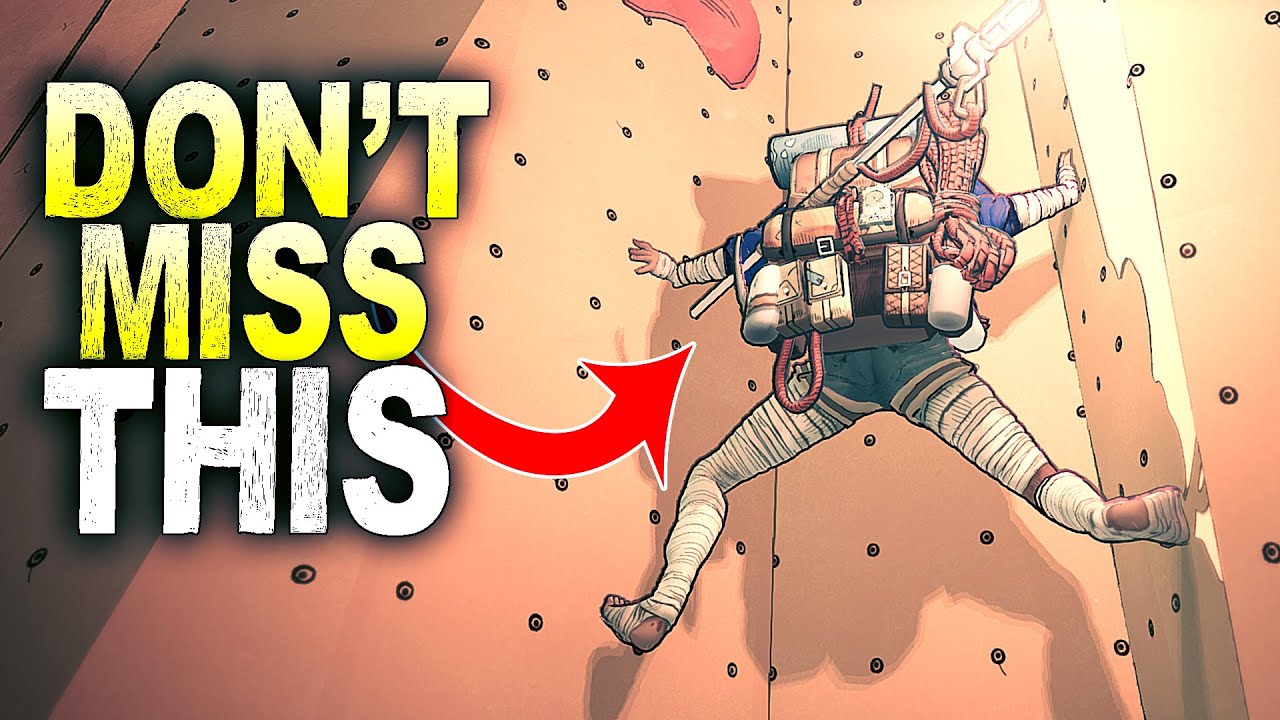
The Cairn Free Demo Review reveals that this isn’t your typical climb-and-fall indie title—its systems work together with surprising depth. From the moment you play as Aava in the demo, the climber’s posture, limb stress, and balance become gameplay tools—not just visuals. Control mechanics let you place hands and feet manually or leave some decisions to the game’s limb-selection logic, depending on how much precision or ease you want.
Cairn Free Demo Review – Why This Survival Experience Goes Deeper Than You’d Expect
The buzz around Cairn is well-earned. Developed by The Game Bakers, this survival-climber challenges players not just to reach the summit, but to master every grip, breath, and resource along the way. The free demo has given players a strong taste of what makes it different: a climbing system rooted in technical precision and survival tension.
The Core Challenge: Climbing as a System
Unlike other games where climbing is a traversal mechanic, in Cairn it’s the whole game. The demo makes it clear that hand and foot placement are everything. Players can toggle between manual limb control for high-precision holds or lean on automatic selection for faster—but riskier—progress. Each decision affects stamina drain and grip reliability, making even short ascents a mental and mechanical puzzle.
Momentum also plays a role: lunging for a hold when your stamina is low increases the chance of slips, while over-chalked hands can stiffen grip but consume resources faster. It’s a constant balance between control and efficiency.
Resource & Gear Management
The demo introduces players to the survival layer that separates Cairn from simple climbing sims. Every climb requires careful packing of gear—pitons, chalk, food, water, and medical supplies. Choosing the wrong mix can cut an attempt short. For example, running out of pitons forces reliance on riskier free-climbs, while overpacking slows progression due to encumbrance.
Gear also degrades over time. In the demo, rope frays and carabiners wear, forcing you to plan maintenance as much as movement. This creates a sense of permanence: mistakes echo forward into the climb rather than being reset instantly.
Open Routes & Procedural Risk
Climbs aren’t linear. Even in the demo, Cairn emphasizes route freedom, letting you choose between obvious but dangerous paths, or slower, more technical ones with better protection. Dynamic weather—wind gusts, rain, sudden fog—adds variability, changing grip friction and visibility mid-climb. These aren’t cosmetic effects but mechanical modifiers baked into the physics system, making each run feel unique.
Presentation & Atmosphere
The art direction is minimalist but powerful. Every rock face is a diorama of detail, and thanks to real-time lighting with ray-traced shadows, the terrain feels alive. Audio design ties directly to survival mechanics: creaking ropes and shifting stone act as warnings, while your climber’s breathing doubles as a stamina indicator. The demo shows how every system is tuned not just for immersion, but for tactical feedback.
Why the Demo Matters
Many free demos feel like vertical slices; Cairn’s instead feels like a microcosm of the full game. It introduces nearly all of the key survival systems—manual grip mechanics, resource loadouts, weather-driven route changes—within a condensed challenge. That means feedback loops are fast: every mistake becomes a lesson, every decision meaningful.
Conclusion
The Cairn Free Demo Review proves this isn’t just another indie climbing game—it’s a technical survival experience that forces you to manage stamina, gear, and terrain with the same seriousness mountaineers do in real life. If this demo is anything to go by, the full release won’t just test your reflexes—it’ll test your planning, risk assessment, and ability to adapt under pressure.

